Let’s make this year better. Less drugs and pain, more activity and memories.

Let’s make this year better. Less drugs and pain, more activity and memories.
Insulin resistance is commonly described as a blood sugar problem, often framed as the result of eating too much sugar or carbohydrates. While blood sugar is certainly part of the picture, this explanation is incomplete. In real human physiology, insulin resistance is also influenced by inflammation, fluid balance, immune activity, and nervous system regulation. Understanding these connections can help patients better understand their symptoms and why conventional approaches do not always bring relief.
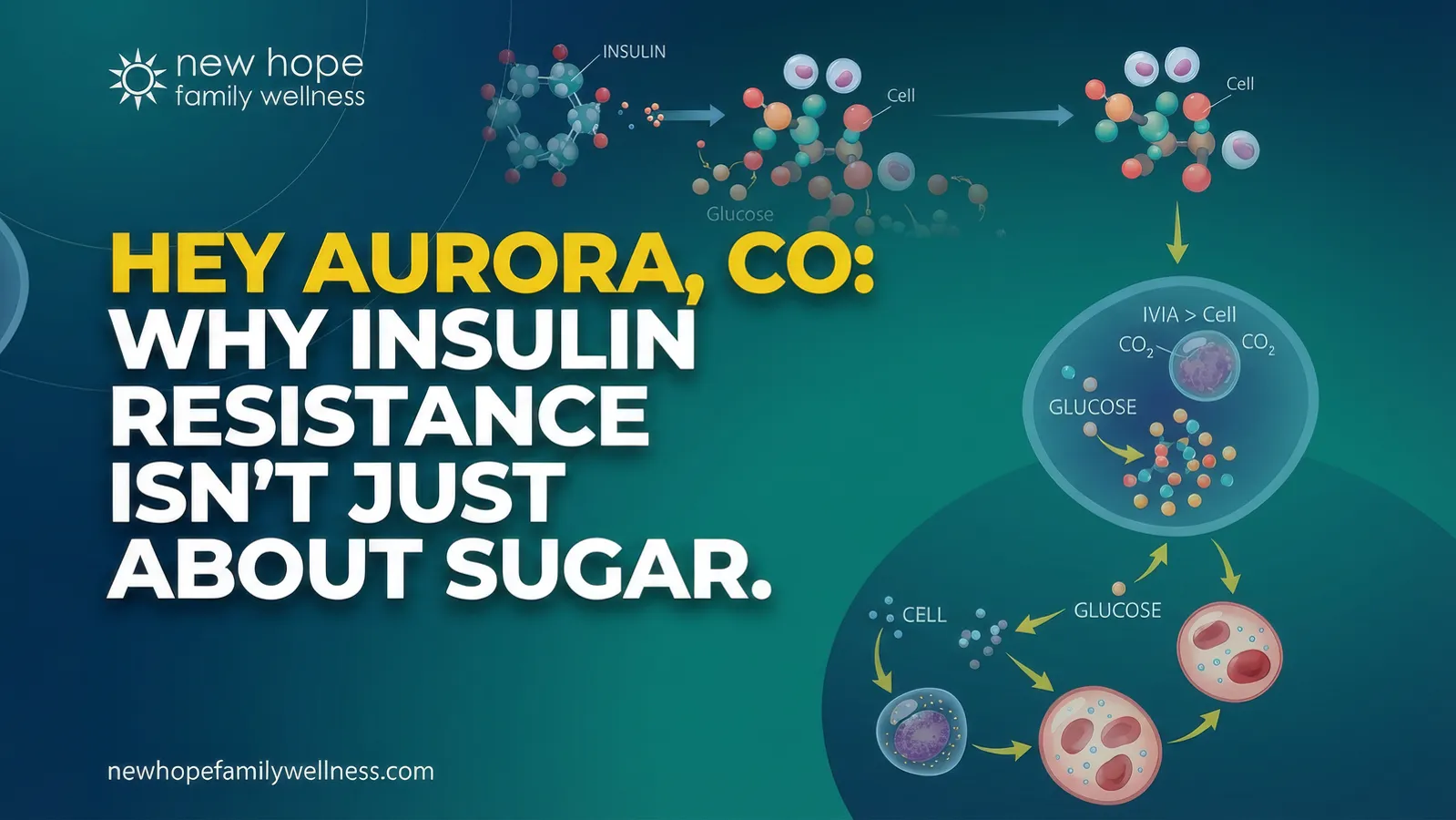
Insulin is a hormone whose primary role is to help move glucose from the bloodstream into the body’s cells, where it can be used for energy. A helpful way to think about insulin is as a delivery messenger. After a meal, glucose enters the bloodstream and insulin signals the cells to open their doors and accept the incoming fuel. In insulin resistance, the cells stop responding clearly to this signal. The body adapts by producing more insulin in an attempt to force the message through. Over time, this leads to chronically elevated insulin levels, unstable blood sugar, increased fat storage—especially around the abdomen—as well as fatigue, inflammation, and mental fog. This process is not a personal failure; it is a physiological response to ongoing stress within the body.
To understand why insulin has difficulty doing its job, it helps to look beyond the bloodstream and toward the environment surrounding the cells. Between the blood vessels and the cells lies a thin layer of fluid known as interstitial fluid. This space acts like a neighborhood street where nutrients, hormones, immune signals, and waste products must travel. Keeping this space clean and flowing is the responsibility of the lymphatic system.
The lymphatic system is the body’s primary drainage and cleanup network. It removes excess fluid from tissues, clears inflammatory by-products, supports immune activity, and assists in fat metabolism and waste removal. Unlike the heart, the lymphatic system does not have its own pump. It relies on movement, breathing, muscle contractions, posture changes, and a well-regulated nervous system to keep fluid moving. When lymphatic flow slows, fluid and inflammatory molecules accumulate around the cells, creating congestion.
Insulin resistance often begins in this congested space around the cell rather than in the bloodstream itself. For insulin to work, it must travel through the blood, exit the blood vessel, move through interstitial fluid, and bind to receptors on the cell surface. If that space is swollen, inflamed, or overloaded with fluid, insulin has difficulty reaching its target. In this situation, insulin and glucose may both be present, but the message does not land. This helps explain why insulin resistance is frequently associated with puffiness, swelling, tissue heaviness, and edema rather than weight gain alone.
Chronic inflammation further complicates this process. Inflammation causes blood vessels to become more permeable, allowing more fluid to leak into the surrounding tissues. This excess fluid must be removed by the lymphatic system. When lymphatic drainage is impaired, inflammatory chemicals linger in the tissue, fat cells become inflamed, and insulin signaling becomes increasingly disrupted. This cycle is particularly common in abdominal or visceral fat and is a key feature of metabolic syndrome.
Adipose tissue, or body fat, is not simply a storage site for excess calories. It is metabolically active and closely connected to immune and lymphatic function. Under stress, fat tissue produces inflammatory signals and depends on healthy lymphatic flow to clear waste. When lymph movement through fat tissue is sluggish, inflammation increases, insulin resistance worsens, and fat becomes easier to store and harder to release. This is why insulin resistance often feels like heaviness, tenderness, or inflammation rather than just a change on the scale.
The nervous system also plays an important role. Chronic stress keeps the body in a persistent “fight or flight” state, raising cortisol levels. Elevated cortisol increases blood sugar, reduces insulin sensitivity, slows digestion, and decreases lymphatic movement. A stressed nervous system leads to sluggish lymph flow, which increases inflammation and further impairs insulin signaling. This helps explain why pushing harder with extreme dieting or excessive exercise often backfires, worsening symptoms instead of improving them.
Supporting insulin sensitivity therefore requires more than controlling sugar intake. It involves improving the environment in which insulin operates. Gentle, regular movement, diaphragmatic breathing, adequate hydration, anti-inflammatory nourishment, and nervous system regulation all help support lymphatic flow. When lymph movement improves, inflammation decreases, tissue congestion softens, and insulin signaling becomes clearer and more effective.
Insulin resistance is not simply a blood sugar issue. It is a communication problem involving hormones, immune signals, fluid dynamics, and the nervous system. The lymphatic system plays a quiet but essential role in maintaining the cellular environment that allows insulin to function properly. Healing occurs most effectively when these systems are supported together rather than treated in isolation.
For many of you that have tightness in your upper back or between your shoulder blades, when your chiropractor tries to adjust you. This is part of the problem, this backed up lymph and stress on the organs from fat surrounding them, is causing your nervous system to be dysregulated. Meaning the brain is getting more messages of stress than ease from your body and so it triggers cortisol, the stress hormone, to be released to help trigger the cells to take in more. Now if this goes on for months and years, this is where the tightness you feel in your spine starts to become more prominent and painful. You can help yourself and your chiropractor by moving your body and eating less carbohydrate and sugar loaded foods and drinks.
This is where detoxing the gut and the liver have a huge advantage at helping your body move the back up lymph within your body. This will help you feel less pain, and your mid back adjust more easily.
As you know, we are always here to help, if you have more questions or think you may need to start addressing this.